The kidney is a high-energy demanding organ vulnerable to AKI and CKD. A review in Nutrients highlights how α-Lipoic Acid (ALA) protects renal function across diverse disease models.
Key Mechanisms
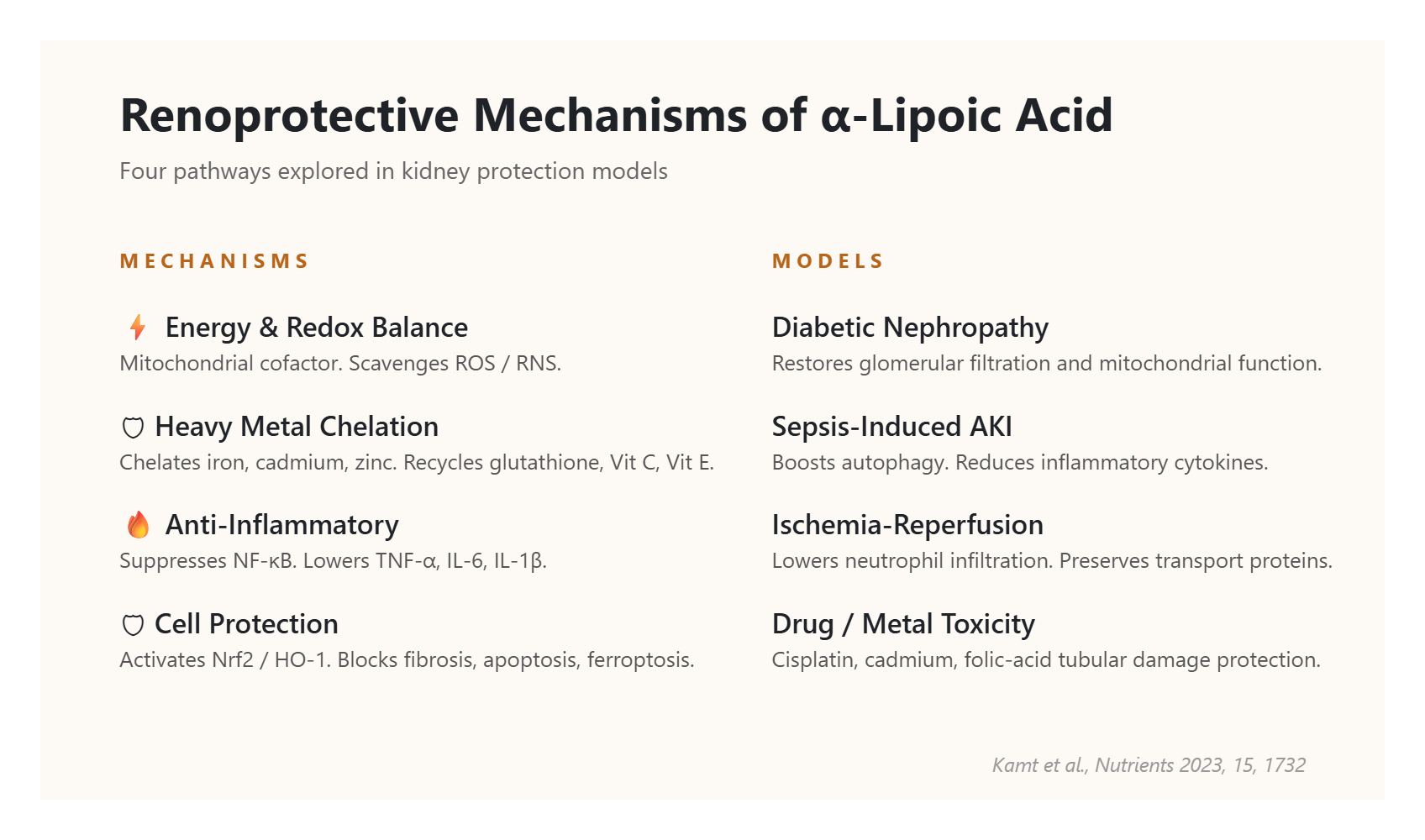
1.Energy & Redox Balance
Serves as a vital mitochondrial cofactor and acts as a universal antioxidant, scavenging ROS/RNS.
2.Heavy Metal Chelation
Chelates iron, cadmium, and zinc while recycling glutathione, Vitamin C, and Vitamin E.
3.Anti-Inflammatory
Suppresses NF-κB to reduce TNF-α, IL-6, and IL-1β.
4.Cell Protection
Activates Nrf2/HO-1 pathway to reduce fibrosis and block apoptosis and ferroptosis.
Proven Efficacy Across Models
1.Diabetic Nephropathy: Restores glomerular filtration and enhances mitochondrial function.
2.Sepsis-Induced AKI: Boosts autophagy and cuts inflammatory cytokines.
3.Ischemia-Reperfusion: Lowers neutrophil infiltration and protects transport proteins.
4.Drug/Metal Toxicity: Protects against Cisplatin-, Cadmium-, and Folic Acid-induced tubular damage.
Takeaway: Advanced target-delivery platforms continue to elevate ALA as a candidate API for renal health and antioxidant therapies.
Ref: Kamt, S.F., et al. Nutrients 2023, 15, 1732.