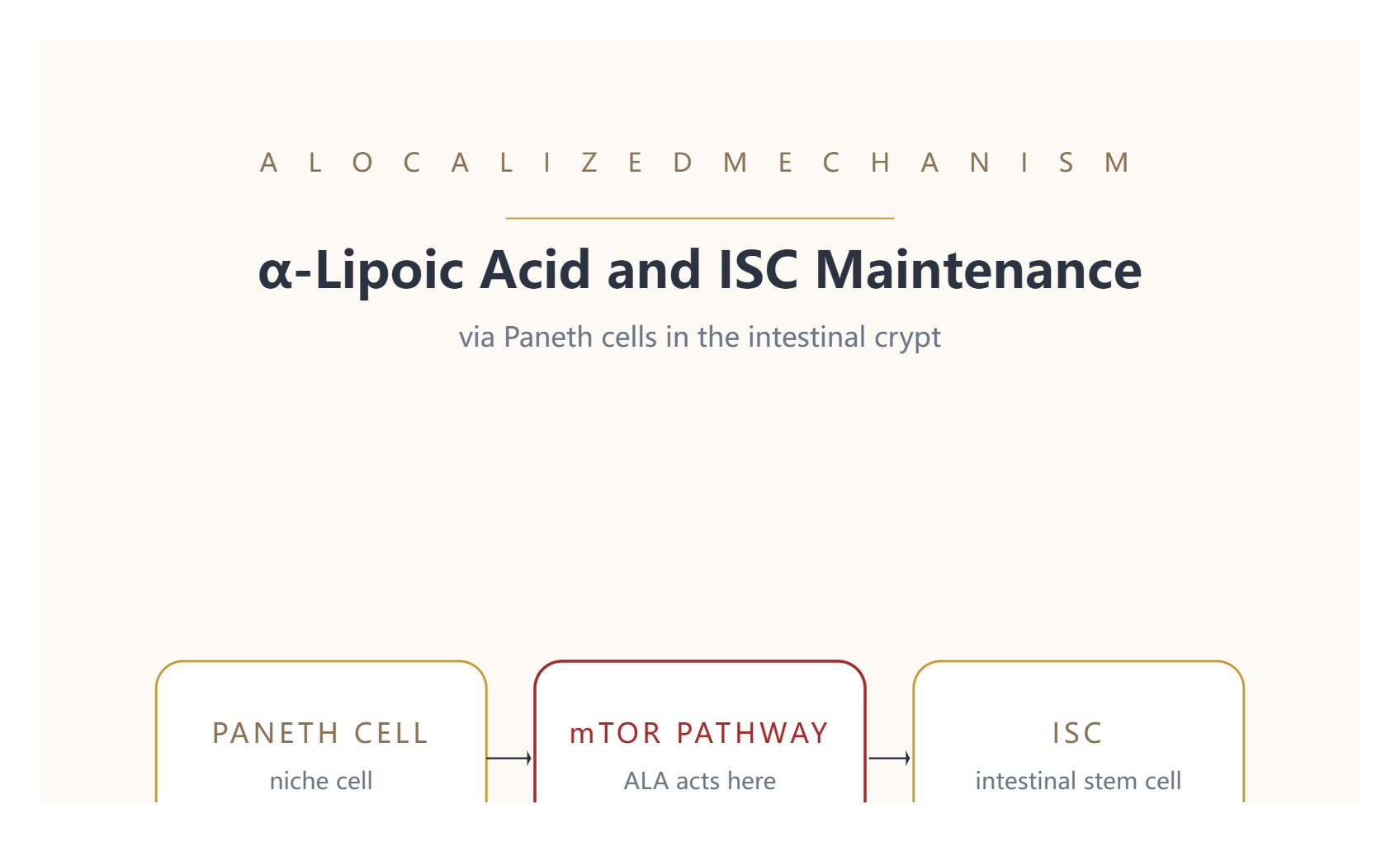
A 2025 Nature Communications paper from Sichuan University's West China Hospital team reports that α-lipoic acid (ALA) plays an active role in keeping intestinal stem cells (ISCs) youthful — and the mechanism runs through Paneth cells, the niche cells that maintain the stem cell compartment in the gut crypt.
Three points buyers and formulators should know:
1.The observation. ALA synthesis is reduced in the aged human small intestine. Supplementation — in human intestinal organoids and in old mouse small intestine — restores ISC function and reduces atypical Paneth cells.
2.The mechanism. ALA acts locally in Paneth cells by inhibiting the mTOR pathway, which in turn shifts the secreted signaling balance (more cADPR, less Notum) in a way that supports ISC maintenance.
3.Why it matters beyond the paper. Most of the established applications for ALA are systemic — oxidative stress, mitochondrial support, neuropathy. This work points to a tissue-localized, gut-specific mechanism, which suggests a different kind of formulation question: site delivery, dose, and stability considerations are not the same as for the established systemic uses.
For an API with a mature footprint, a paper like this is a reminder that the indication map is still expanding.
Reference: Zhang Z, Wan Q, et al. Nat Commun 2025;16:6016. doi:10.1038/s41467-025-61070-z.